My name is Sheva Abeles-Allison, and as the high school Library Media Specialist, there is nothing I love more than when I connect students, staff, and teachers with what they’re looking for. The WiLS Ideas to Action Fund has allowed the Ashland High School library & makerspace to do just that in a new and profound way.
Ashland, Wisconsin, is located on the southern shore of Lake Superior and is within the unceded territories of several Anishinaabe Ojibwe Tribes. Approximately 20% of students in the School District of Ashland are Bad River, Red Cliff, Lac Du Flambeau, Lac Courte Oreilles, and Fond Du Lac tribal members…to name a few.
Outside of school, on the Bad River Reservation “Maskiiziibiikong,” our tribal students are seeing their community-driven improvements on the regular. A huge Health & Wellness center expansion, a new Food Sovereignty building and food processing facility, regular baaga’adowewin (traditional lacrosse) games at the Powwow grounds, quilting groups, round dances, as well as continuous programming and service for youth and elders. There is a lot of important visible work happening. Work that is deeply rooted in Anishinaabe cultural values, histories, and futures.
Another place where our native students spend a significant amount of time is at our area public schools. The US public school system is particularly stringent and has a history of settler colonialism that still permeates its everyday structure. Embracing Anishinaabe culture at the School District of Ashland is crucial to making our schools better places for Anishinaabe students. The Anishinaabe Handcraft Literacy project is one attempt I will highlight here.
The news of beading and sewing supplies in the library spread like a midwest prescribed burn. Ecologically and culturally overdue.
“I hear you have beads?”
“Someone said you have stuff to make ribbon skirts? Can I make one? Can you show me how?”
As a freshman in high school and prolific beader/sewist, Marcus (now a senior at Ashland High School) taught me how to bead and make a ribbon skirt so I could help him teach his peers. We talked about the potential of this project for two years before sending our proposal to the WiLS’ Ideas to Action Fund. This school year, with monies provided by WiLS Ideas to Action Fund and input from community members and Marcus’ peers, we purchased EVERYTHING we need to provide Ashland High School students and staff with access to beading and sewing supplies.
Students and staff stop by the library during the school day to find materials and tools for their beading and sewing projects. If I’m busy, there is always at least one student or staff member in the library who can help them get started. Wristlets and earrings are a popular first project option.
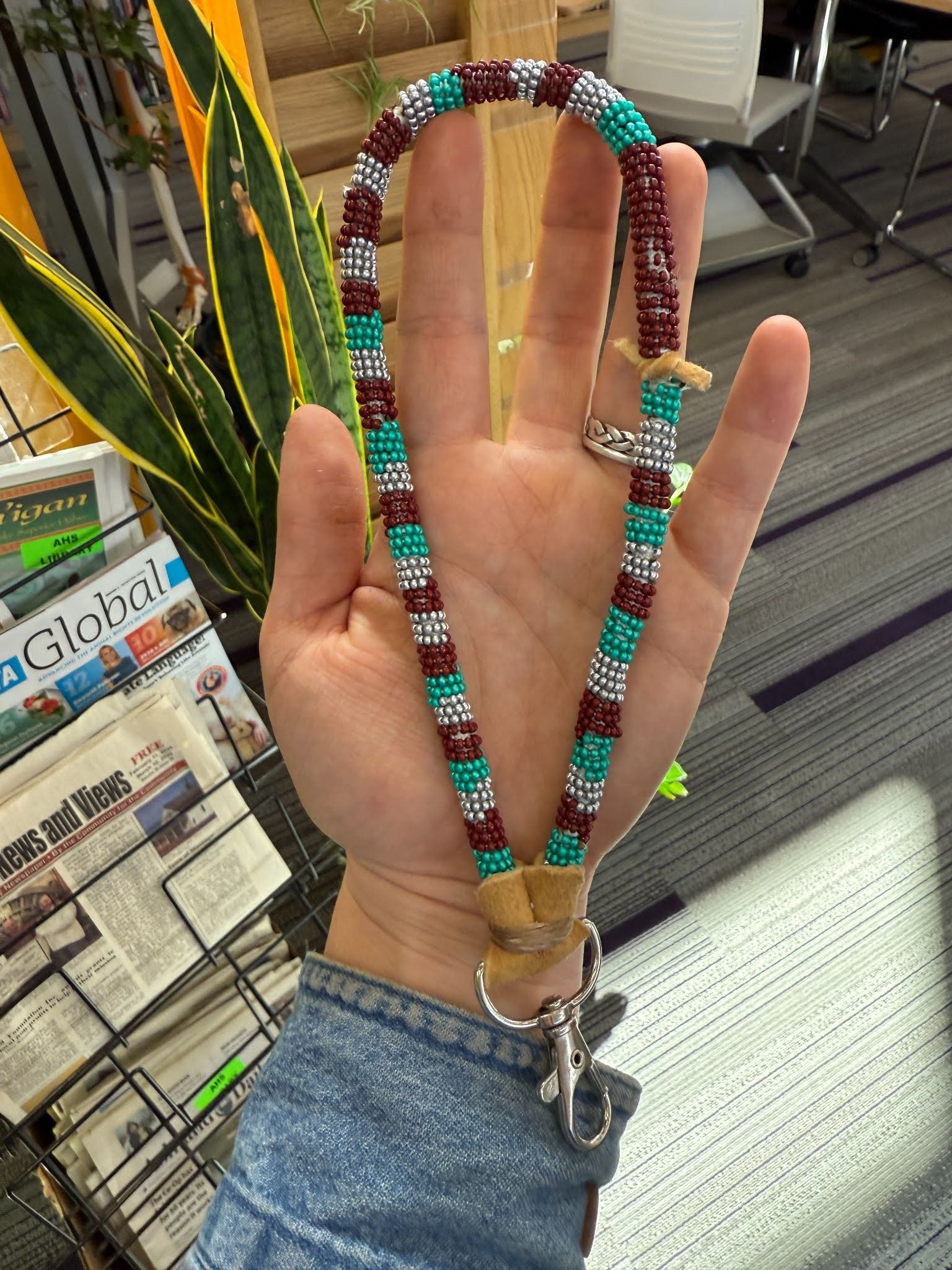
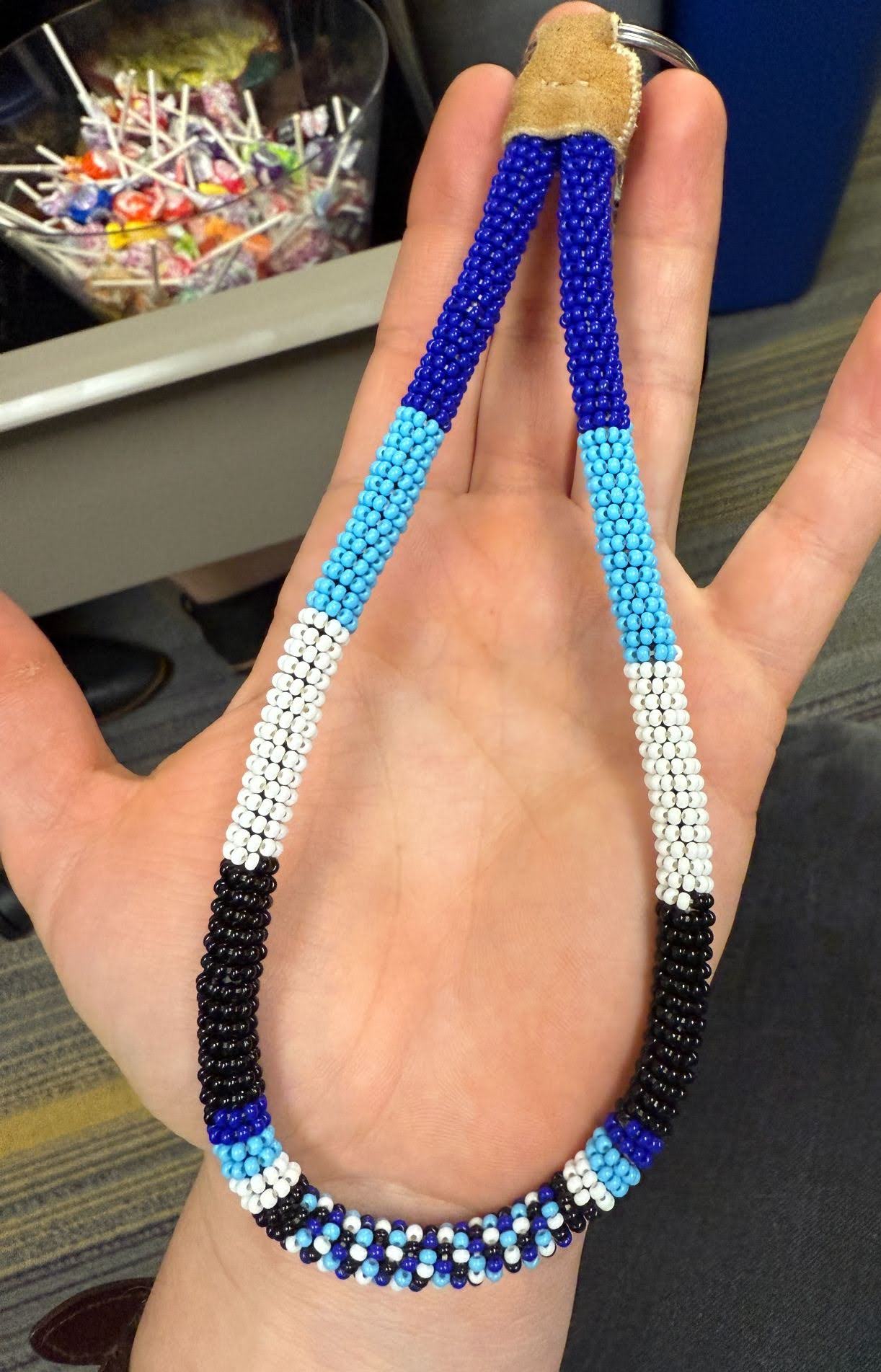
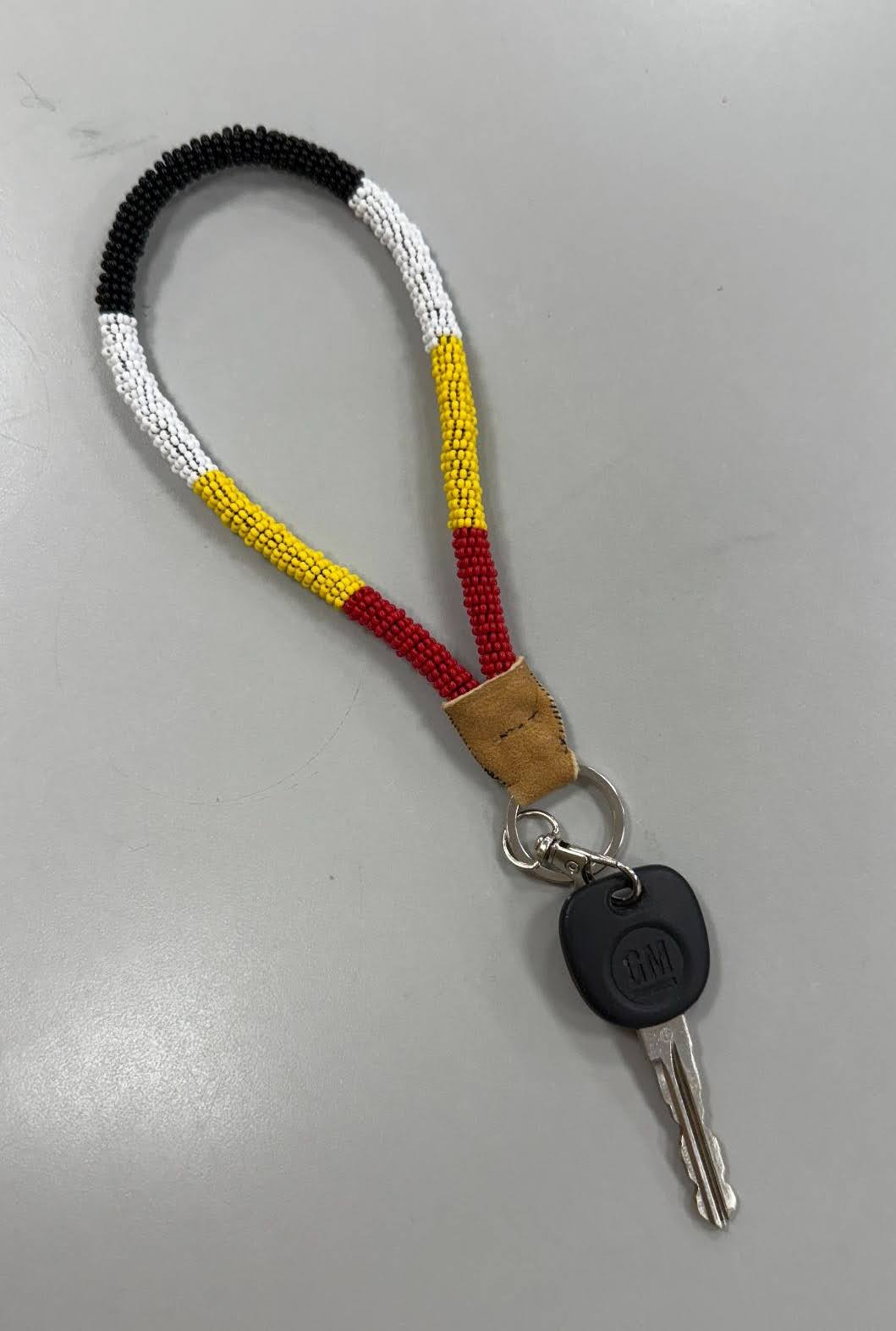
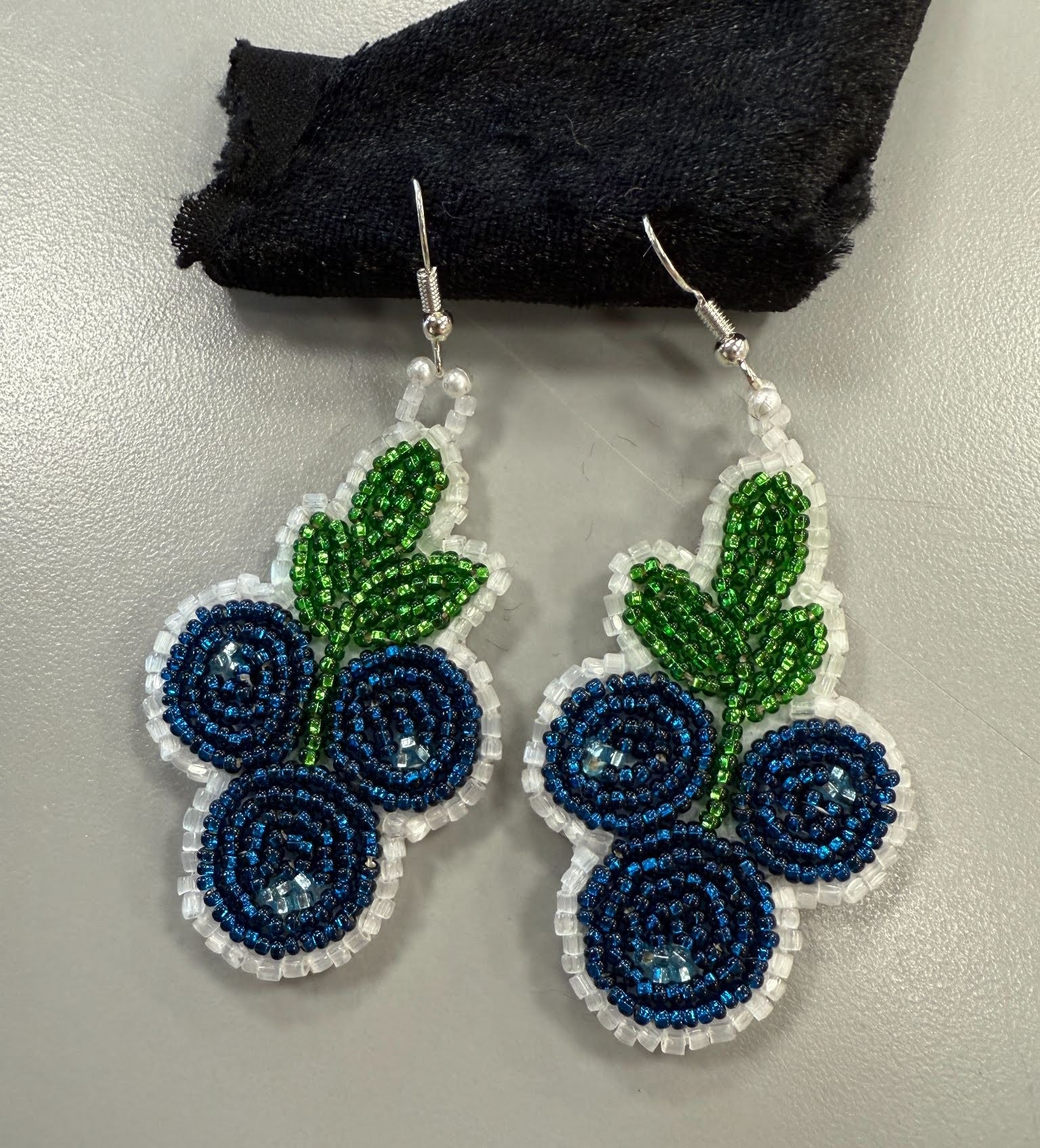
Three beaded wristlets for keys made by students in varying color combinations; red, black, white & red, dark blue, light blue, black, & white, silver, maroon & teal. Each wristlet has an end wrapped in buckskin. The remaining image shows one set of dangly earrings in the shape of three blue blueberries with green vegetation and outline in white beads.
Every couple months we take a field trip to our local bead store and fabric store to up our supplies and offerings. We now have 30+ colors of size 11 Czech seed beads, multiple types of needles, 2 brain-tanned buckskin hides, 1” ribbons of all colors, pellon, fabric scissors and so much more. I was able to complement the Ideas to Action Fund monies with Common School Funds (a fund available to public school libraries) to purchase 2 sewing machines, one of which is capable of sewing through buckskin.
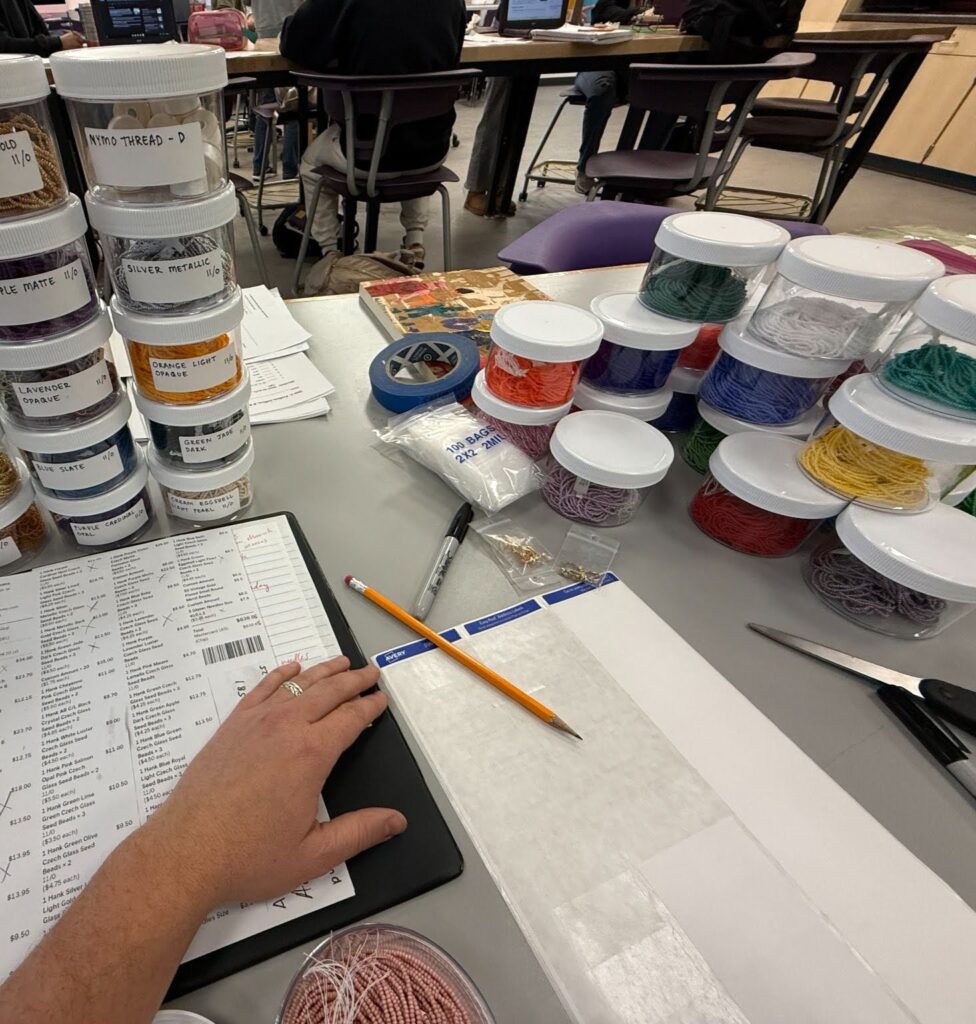
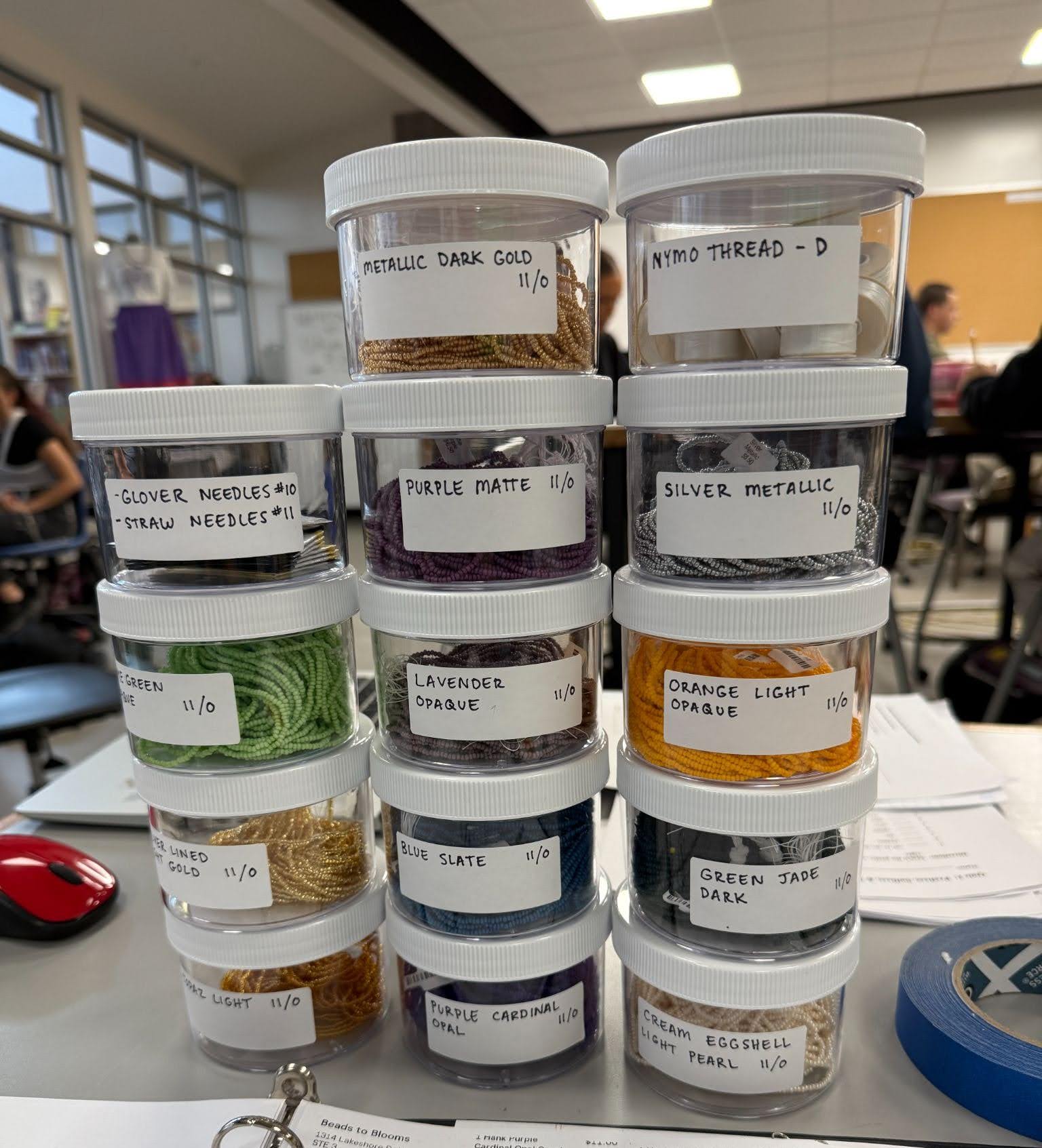
Stacks of clear round containers that hold size 11 Czech seed beads, thread, and various types of needles. The containers are then labeled with the purchased names so they are easy to identify and refill. Students cut the beads from their hanks and sort them into the containers by color and finish: matte, opaque, and pearl.
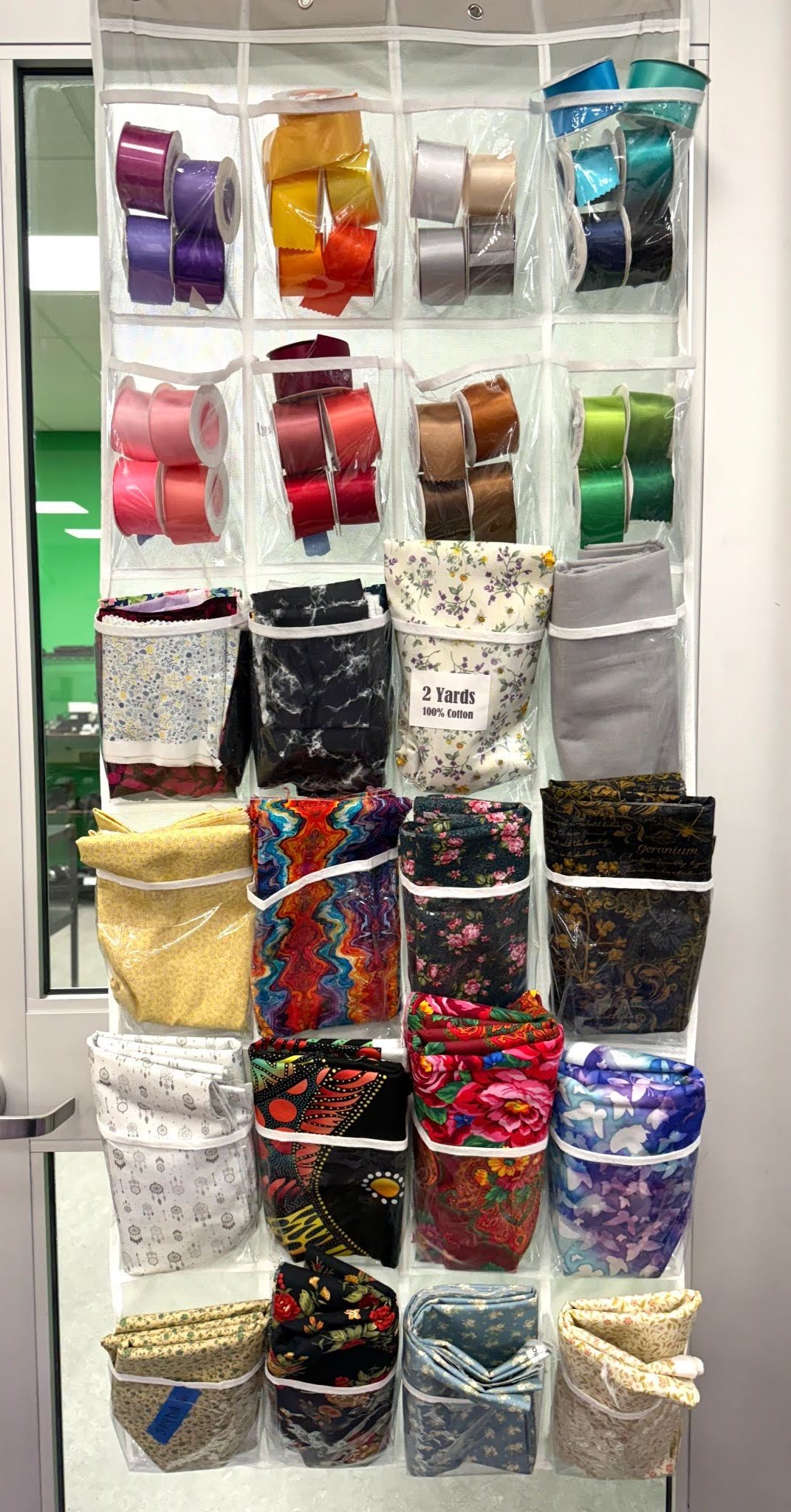
A 24-pocket bag hangs from the back of a door. The first two rows of pockets are packed with satin ribbons sorted by color. The next 4 rows down have various 2 yards of cotton fabric in them. These are some of the materials used for sewing ribbon skirts.
The project has allowed for multiple students to become teachers to their peers and staff. As a teacher, I’m able to refer students and staff to our resident expert students. In May of this year, one of the Beading & Sewing Club founding members, Marcus, was able to lead a 4-hour beading class for 16 students and 4 adults with peripheral assistance from me. Marcus gained invaluable experience from the process. We met several times leading up to the class to decide on the structure, what materials would be needed, and how to best lead beginners into beading basics.
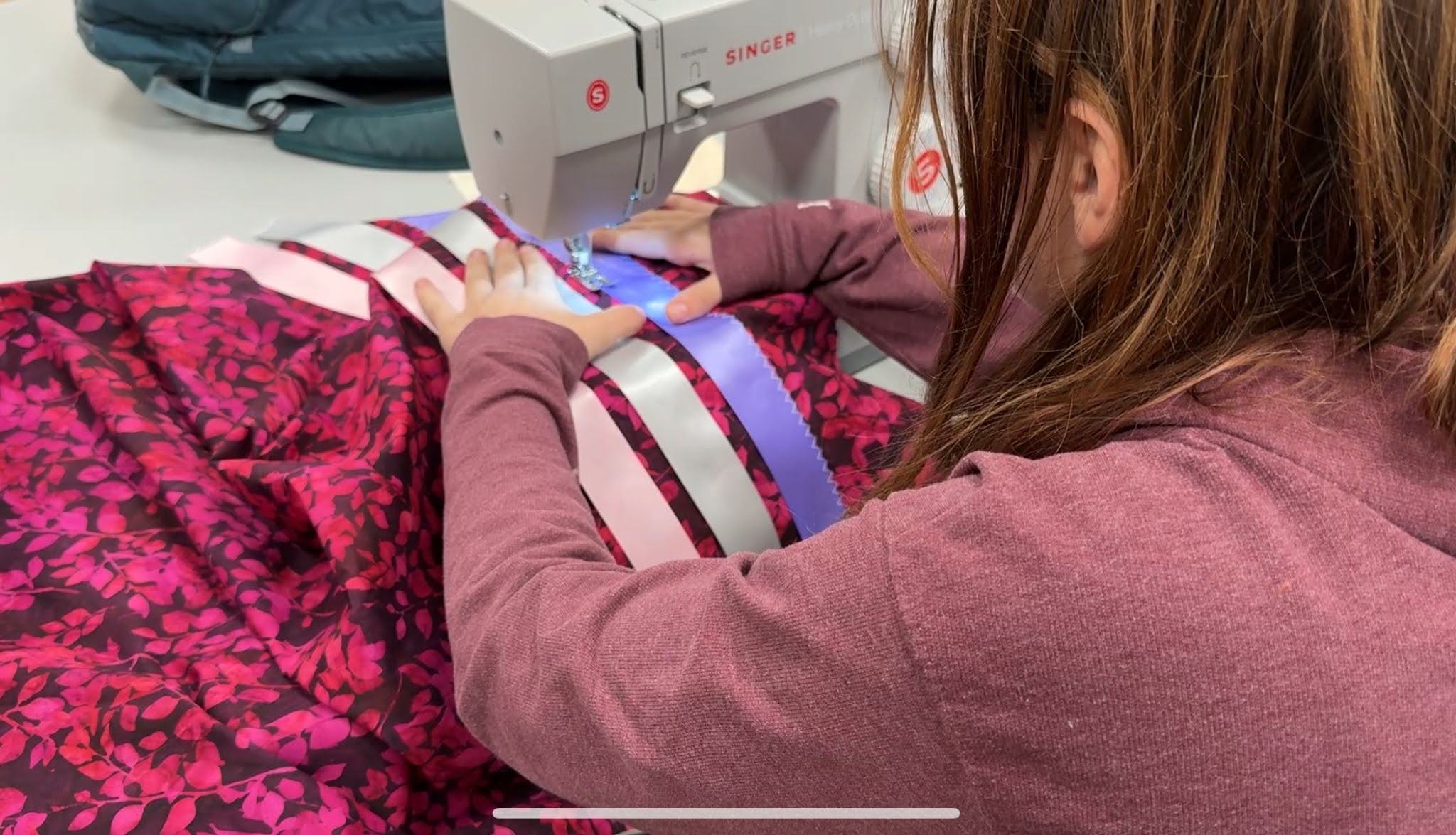
A student sews a ribbon skirt using a heavy-duty Singer sewing machine. She is sewing down both edges of a purple satin ribbon onto a leaf-patterned maroon and hot pink fabric. She will do this with the remaining grey and pink satin ribbons as well. This is her first ribbon skirt.
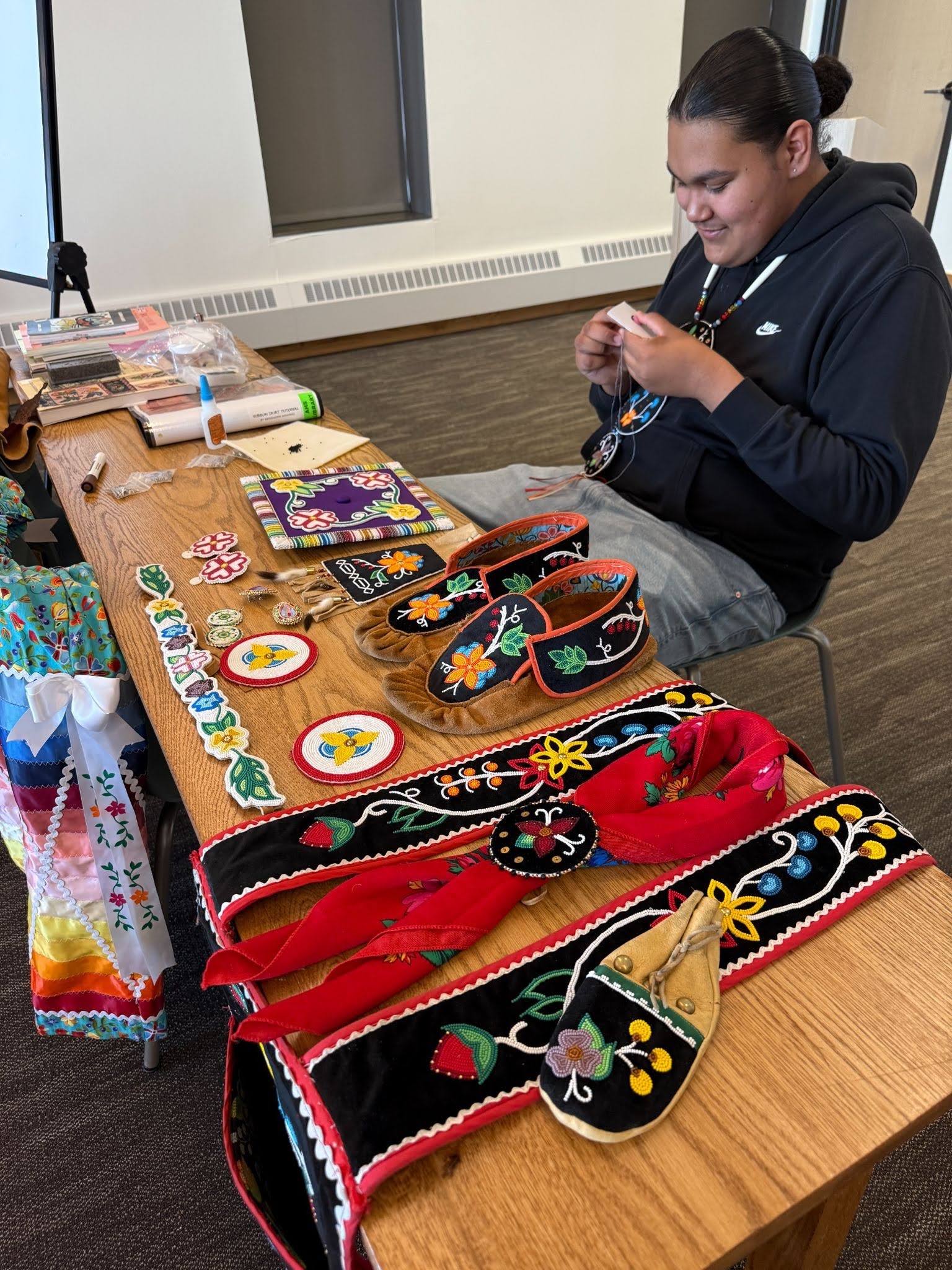
Marcus sits behind a table and fixes a participant’s project during a 20-participant workshop. The table in front of him is filled with examples of his handcrafts: a bandolier bag, medicine pouch, scarf tie, headband, earrings, moccasins, ribbon skirt, and graduation cap.
There is something powerful about being so visible with decidedly Anishinaabe crafts. Students are beading and sewing in their school downtime in lieu of scrolling on their phones or YouTube. Their active concentration stands out, and I’ve had many students tell me that beading especially is calming for them. For other students, beading and sewing will turn into a lucrative art, and I’m certain we will see their future work on the regalia of dancers.
Thank you so much to WiLS staff and their support of and belief in our vision for Anishinaabe Handcraft Literacy.